If heavy periods or pelvic pain leave you unsure where to start, this guide is for you. “Fibroids vs Adenomyosis: Gynecologist Jaipur Explains” cuts through confusion so you can speak with a Gynecologist confidently and choose the right next step.
What Makes Fibroids and Adenomyosis Different?
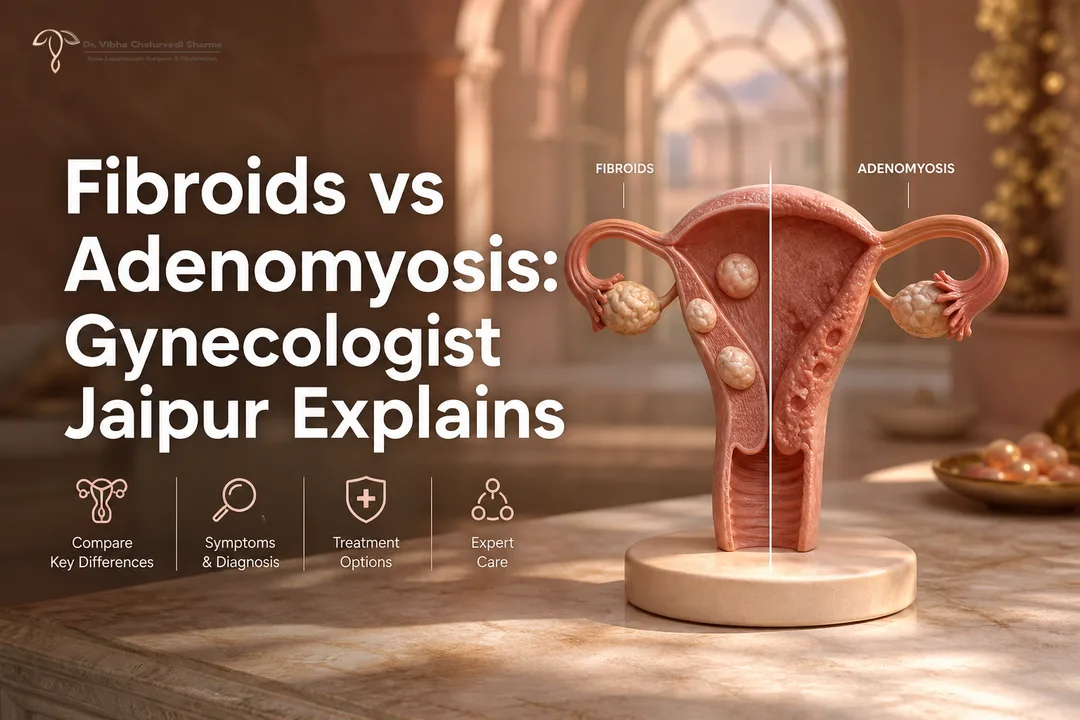
Although both conditions affect the uterus and can look similar on the surface, their biology differs. Fibroids are benign muscular growths that form distinct nodules in or on the uterine wall. In contrast, adenomyosis is a diffuse process where endometrial glands grow into the muscle of the uterus, which causes thickening and tenderness.
Because of this difference, fibroids often behave like space-occupying masses. They may bulge into the cavity, sit within the wall, or grow on the outside. Meanwhile, adenomyosis makes the entire uterus feel boggy and enlarged rather than lumpy. Therefore, treatments also differ, especially when fertility is a priority.
Authoritative bodies draw the same distinction. According to the ACOG guidance on uterine fibroids, up to 70–80% of women may develop fibroids by age 50. By comparison, the Mayo Clinic overview of adenomyosis notes that symptoms often worsen during the 40s and can improve after menopause.
In our Jaipur practice, we routinely meet women who were told they had “fibroids” after a quick scan. Later, detailed imaging shows adenomyosis instead. Once we match the diagnosis to the right therapy, pain control and bleeding often improve within a few cycles. Experience matters because the two conditions demand different strategies.
Symptoms You’ll Notice — And What They Mean
Both problems can cause heavy menstrual bleeding, painful cramps, pelvic pressure, and fatigue from anemia. However, certain patterns provide clues. Fibroids more commonly lead to bulk symptoms such as urinary frequency, constipation, or a visible abdominal bulge when nodules grow large. Adenomyosis, on the other hand, often creates intense period cramps, deep ache in the pelvis, and pain with intercourse due to diffuse uterine sensitivity.
Importantly, symptom severity does not always mirror the size of a lesion. A small fibroid sitting inside the cavity may trigger flooding. Conversely, a thickened adenomyotic uterus can cause disabling cramps even if an ultrasound lists “no large masses.” For period heaviness itself, the NHS advice on heavy periods outlines red flags such as passing large clots or soaking protection every hour.
- Fibroids: pressure or fullness, urinary frequency, constipation, heavy or prolonged bleeding.
- Adenomyosis: severe cramps, pelvic tenderness, heavy bleeding with deep ache, pain during intercourse.
- Shared signs: fatigue from anemia, cycle disruption, and reduced quality of life.
Because symptoms overlap, you should avoid self-diagnosis. Instead, pair your history with a targeted exam and the right imaging to reach clarity.
Diagnosis: Getting to a Clear Answer
Accurate diagnosis begins with listening. We review your bleeding pattern, pain timing, pregnancy goals, and any prior surgeries. Then we perform a focused pelvic exam. Next, we choose imaging that answers a specific question rather than repeating generic scans.
When to See a Gynecologist in Jaipur
Seek care if you bleed through pads hourly, feel constant pelvic pressure, or have severe cramps that limit activity. Also, visit early if you plan a pregnancy and worry about miscarriage or subfertility. Timely assessment preserves options. You can also learn about our patient-first approach on the Dr. Vibha Chaturvedi Sharma homepage.
Imaging and Exams Your OB-GYN May Use
Transvaginal ultrasound is the usual starting point because it is accessible and informative. It can map fibroid number and size and may reveal features that hint at adenomyosis, such as a thickened junctional zone or small intramyometrial cysts. However, ultrasound quality varies, so we align the scan with your symptoms and exam findings.
Ultrasound vs MRI: how they compare
Ultrasound helps with common cases and is quick. MRI offers superior tissue contrast and can confirm adenomyosis or show fibroid location with precision. We recommend MRI when ultrasound is inconclusive, when surgery is being planned, or when fertility considerations make accurate mapping essential. As a result, we avoid surprises in the operating room and choose the least invasive path.
Sometimes we recommend hysteroscopy to look inside the cavity. This office procedure uses a thin camera to view submucosal fibroids or polyps directly. If we see a small lesion, we can often treat it during the same sitting, which saves time and improves bleeding rapidly.
Treatment Paths That Balance Relief and Fertility
Management depends on your symptoms, age, desire for future pregnancy, and the exact diagnosis. Most women want relief without compromising fertility. Therefore, we start with the least invasive option that still addresses the root cause.
Gynecologist-Recommended Treatment Options
For heavy bleeding and pain, first-line medical options may include anti-inflammatory pain relief during menses and hormonal approaches such as combined pills, progestin-only pills, or a levonorgestrel-releasing intrauterine system. These reduce bleeding and cramps for many women with either condition. When diffuse adenomyosis drives pain, we may add GnRH analogs for short periods to quiet the lining and shrink the uterus.
For fibroids that distort the cavity, hysteroscopic resection can remove the submucosal component through the natural opening of the cervix. For larger intramural or subserosal nodules in women seeking fertility, laparoscopic myomectomy removes fibroids while preserving the uterus. We also discuss uterine artery embolization for selected cases that focus on symptom control over conception. Importantly, we individualize each plan and clearly explain trade-offs.
When adenomyosis dominates and medicines fail, we may suggest laparoscopic adenomyomectomy in carefully chosen cases or, for women who have completed family building, hysterectomy. Many patients worry about recovery time. Minimally invasive techniques shorten hospital stay and reduce pain, which helps you return to normal faster.
In our day-to-day surgical work, we often combine diagnostic hysteroscopy with laparoscopy. This approach allows us to treat submucosal fibroids, check the tubes, and assess endometriosis in one sitting if symptoms suggest it. Because we plan precisely from imaging, blood loss remains low and recovery smooth for most patients.
Throughout care, choose a Gynecologist who performs both hysteroscopic and laparoscopic procedures regularly. Comprehensive expertise keeps options open and aligns the plan with your goals.
Living Well After Treatment: Practical Care Tips
Recovery and long-term wellness deserve equal attention. First, track your cycles and symptoms for three months after starting treatment. This log helps us see trends and adjust therapy quickly. Second, optimize iron intake through food and, if prescribed, iron supplements to rebuild energy after heavy bleeding.
Moreover, maintain gentle physical activity. Walking and core-strength routines improve blood flow and reduce cramps for many patients. If intercourse pain persists, pelvic floor physiotherapy and targeted stretches often help. Finally, schedule follow-ups as advised. Early conversations prevent small issues from becoming setbacks.
Diet plays a supportive role. Emphasize balanced plates with vegetables, lean proteins, and whole grains. Although no food cures fibroids or adenomyosis, stable weight, better sleep, and stress control reduce flare-ups for many women. As always, avoid smoking, limit alcohol, and discuss any herbal products before starting them.
Conclusion: Confident, Informed Choices in Jaipur
The right diagnosis guides the right plan. Fibroids form discrete nodules, while adenomyosis infiltrates the uterine muscle. Therefore, symptoms may overlap, yet treatments differ. If you feel uncertain, consult a Gynecologist early so we can match therapy to your goals and protect fertility when possible. Our team provides evidence-based, compassionate care grounded in everyday surgical experience and current guidance from organizations such as ACOG and Mayo Clinic. You can learn more about our approach at our Jaipur women’s health clinic. This article is educational and cannot replace a personalized consultation; results vary based on individual factors.
Clinic Locations & Appointments
📞 Phone: 78499 09109
📍 SURYA HOSPITALS
C-8, B-7, Sawai Ram Singh Road,
Opposite SMS Hospital, Jaipur
📍 UDBHAV
A-35, Prince Road, Ajmer Road,
Vidhyut Nagar, Jaipur, Rajasthan – 302019
Book your consultation today for expert laparoscopic treatment and comprehensive women’s healthcare.