Looking for clear, local advice on cervical checks? Cervical Screening: Gynecologist Jaipur Safe Pap Smear Guide is your step-by-step companion. As a trusted clinic resource from Dr. Vibha Chaturvedi Sharma in Jaipur, this article explains what to expect, why it matters, and how to prepare for a calm, confident visit.
What cervical screening is and why it matters
Cervical screening is a preventive health check that looks for early cell changes on the cervix. These changes can develop into cancer over time if they remain untreated. Early detection lets your clinician treat tiny problems before they become serious. As a result, screening protects long-term reproductive health.
Most cervical cancer links to persistent infection with high‑risk human papillomavirus (HPV). The World Health Organization notes that about 99% of cervical cancers are associated with high‑risk HPV. Because of this strong link, modern screening often includes HPV testing alongside or instead of a traditional Pap smear. Together, these tests create a safety net.
In our Jaipur practice, we see a common pattern. First‑time visitors arrive anxious about discomfort or results. We walk them through each step, use gentle technique, and answer every question. Consequently, most patients leave saying the experience felt easier than they expected.
How a Pap smear works
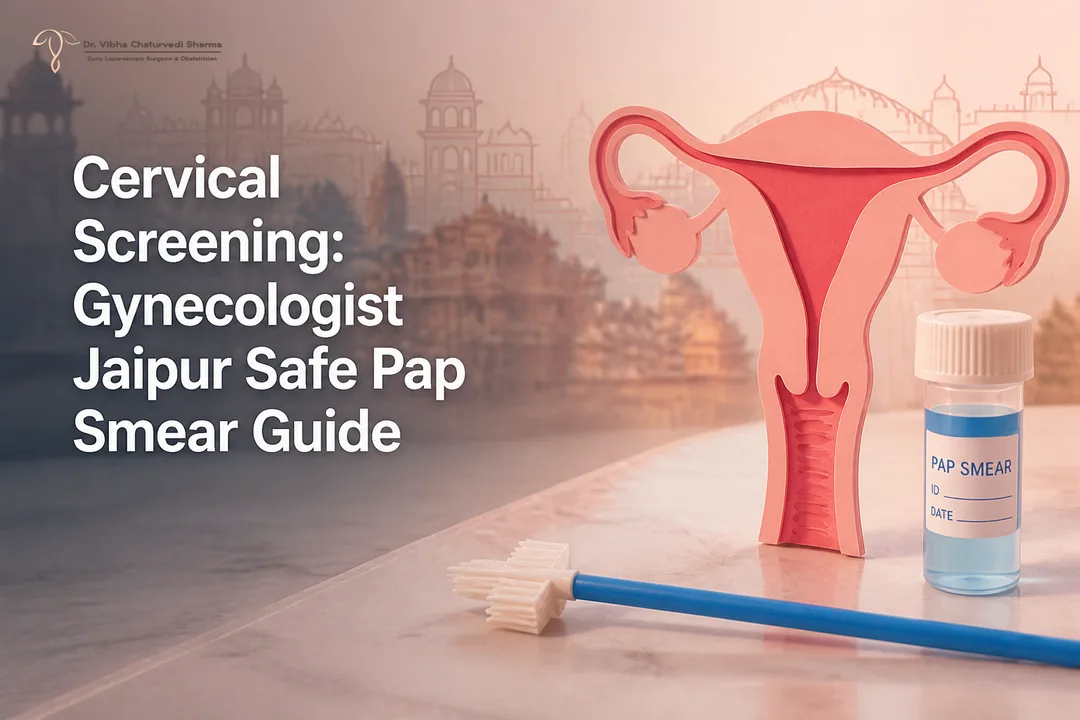
A Pap smear is quick. You lie on the exam couch while a speculum gently opens the vaginal walls. Then the clinician uses a soft brush to collect cells from the cervix. The sample goes to the lab for cytology, where experts look for atypical cells under a microscope.
HPV testing uses the same sample in many clinics. The lab checks for DNA from high‑risk HPV types. If the test finds high‑risk HPV, your clinician may adjust follow‑up timing or perform additional checks. Importantly, a positive HPV test does not mean cancer. It only signals a higher need for monitoring.
What labs look for
In cytology, pathologists examine cells for changes like ASC‑US (atypical squamous cells of undetermined significance), LSIL (low‑grade changes), or HSIL (high‑grade changes). High‑risk HPV testing looks for types such as 16 and 18, which drive many high‑grade changes. Your report will translate these findings into a clear action plan.
Jaipur gynecology expertise for cervical health
Our team focuses on evidence‑based, compassionate care. We schedule visits with enough time for discussion. Moreover, we coordinate reminders so you do not miss follow‑ups. When a result needs closer evaluation, we explain options like colposcopy in plain language and help you choose a path that matches your values.
Gynecologist Jaipur: When to start and how often
Screening schedules depend on age, test type, and risk. The American College of Obstetricians and Gynecologists provides clear guidance you can trust. ACOG recommends starting regular screening at age 21 for most people with a cervix. After that, the interval varies by test type and age.
Use this quick overview to discuss a personalised plan during your visit:
- Ages 21–29: Pap test every 3 years if results stay normal.
- Ages 30–65: One of three options — primary HPV testing every 5 years, co‑testing (HPV + Pap) every 5 years, or Pap alone every 3 years.
- After 65: Many can stop if they have adequate prior negative results and no high‑risk history. Ask your clinician to confirm.
Certain situations change the plan. For instance, a history of cervical cancer, HIV infection, immune suppression, or in utero DES exposure requires a different schedule. Therefore, share your full medical history at each visit so your clinician can tailor advice.
HPV testing vs Pap smear
Both tests help prevent cancer, yet they differ. A Pap smear looks for abnormal cells that may already show changes. In contrast, an HPV test looks for the virus types that can trigger those changes later. Combining them increases sensitivity, although it may create extra follow‑ups for some people.
Which test is best for you? It depends on age, prior results, and your preference for longer intervals versus potential callbacks. We explain the trade‑offs in clinic and help you select the option that fits your comfort and risk profile.
Preparing for your appointment
Good preparation improves sample quality and comfort. Pick a date when you do not expect heavy bleeding. Light spotting usually does not stop a sample, yet choosing a clear day helps the lab read cells more easily.
Plan your questions in advance. Bring past reports and your vaccination history if you have them. If anxiety runs high, consider a short call with our nurse. That conversation often reduces fear and sets expectations.
Preparing for your visit — Gynecologist Jaipur checklist
These simple steps make the appointment smoother. The NHS also recommends avoiding products and intercourse shortly before testing. Follow this checklist to protect sample quality:
- Avoid vaginal intercourse, douching, or spermicides for 24–48 hours before the test.
- Skip vaginal creams or medicines unless your doctor advises them.
- Schedule outside of heavy flow days when possible.
- Empty your bladder before the exam to ease pressure.
- Note symptoms like pain, unusual discharge, or bleeding between periods.
Avoid these right before the test
Do not use tampons, lubricants, or intimate washes on the day of your visit. These products can dilute or obscure cervical cells. Instead, choose a simple shower and wear comfortable clothing.
Results, follow‑up, and next steps
Your report will arrive with clear terms and a plan. Normal results mean you return at the routine interval. If the lab finds certain changes or high‑risk HPV, we may repeat testing sooner or arrange a colposcopy. During colposcopy, we examine the cervix with magnification and take tiny biopsies if needed. The test is quick, and most people return to normal activity the same day.
Abnormal does not equal cancer. In fact, many low‑grade changes resolve as your immune system clears HPV. When results are unclear, we balance watchful waiting with timely action. The Mayo Clinic explains how results guide follow‑up and why context matters. Therefore, tell us if you smoke, have immune conditions, or face new symptoms, because these details shape next steps.
Occasionally, we recommend treatment for high‑grade changes. Options include excisional procedures performed with precision tools. We discuss benefits, risks, and recovery in detail. Importantly, we avoid unnecessary interventions when observation is safe. Your values guide the plan.
Comfort, dignity, and your questions
Your comfort matters. We explain each step before we begin and check consent at every stage. You can ask to pause, adjust position, or use a smaller speculum. Furthermore, you can request a chaperone. Clear communication keeps the visit respectful and calm.
Bring any concern to your appointment. For example, tell us about pain with periods, irregular bleeding, or symptoms that suggest infections like vaginitis. We can investigate these issues during the same visit in many cases. That way, one appointment solves several problems efficiently.
If you need a trusted local team for preventive care, explore our services at Dr. Vibha Chaturvedi Sharma. You can also learn more about patient‑centric women’s healthcare at our Jaipur women’s health clinic.
What to expect on the day
Arrive a few minutes early to complete forms and relax. We confirm your history, allergies, and any prior surgeries. Next, we review the procedure and agree on a plan. The collection usually takes less than two minutes. Afterward, you can return to normal activities.
Mild spotting can occur for a short time. Therefore, carry a panty liner. If you notice heavy bleeding, fever, or persistent pain, contact the clinic. Those symptoms are uncommon, yet they warrant a quick check.
Your long‑term cervical health plan
Cervical screening is one part of a broader wellness strategy. Vaccination against HPV, tobacco cessation, and barrier protection support cervical health. In addition, regular reviews of menstrual patterns, pelvic pain, and fertility goals help us tailor care across life stages, from the twenties through post‑menopause.
Our team also manages related conditions with a minimally invasive approach. When needed, we use hysteroscopy or laparoscopic surgery to diagnose and treat issues like fibroids, endometriosis, and ovarian cysts with faster recovery. You receive coordinated counseling about fertility, pregnancy planning, and symptom relief.
Conclusion: a confident next step
With the right information and a calm clinic experience, cervical screening becomes straightforward. Discuss timing, test choice, and comfort options with us, and bring your past results for review. For local, compassionate guidance, book an appointment and mention this resource. Your preventive care today protects future fertility and overall wellness.
Finally, if you prefer local continuity of care, schedule your visit with a trusted Gynecologist Jaipur team. We will personalise your plan, explain each result, and support you from screening through follow‑up with empathy and skill.
Appointments & Locations
📞 Phone: 78499 09109
📍 SURYA HOSPITALS
C-8, B-7, Sawai Ram Singh Road,
Opposite SMS Hospital, Jaipur
📍 UDBHAV
A-35, Prince Road, Ajmer Road,
Vidhyut Nagar, Jaipur, Rajasthan – 302019
Book your consultation today for expert laparoscopic treatment and comprehensive women’s healthcare.