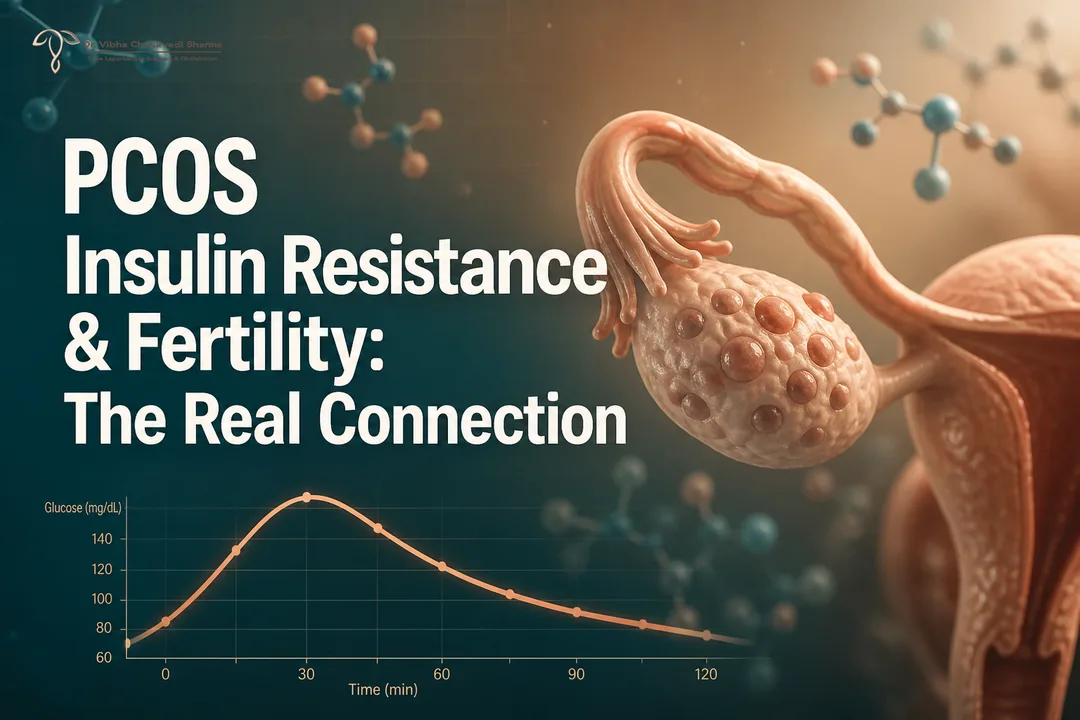
As a Gynecologist and Fertility Specialist in Jaipur, I’m often asked how PCOS insulin resistance actually affects the chance of pregnancy. In PCOS Insulin Resistance & Fertility: The Real Connection, you’ll learn what really links these problems and how we address them step by step in clinic.
What PCOS Really Is—and Why It Affects Fertility
Polycystic Ovary Syndrome is a hormonal condition that changes how the ovaries work. Many patients think the problem is “cysts.” In truth, the main issue is disordered hormone signaling that disrupts egg development and release.
The brain and ovaries talk through the pituitary hormones LH and FSH. In PCOS, this conversation skews toward higher LH, higher androgens, and often irregular or absent ovulation. As a result, periods space out, acne or excess hair may appear, and the ovaries show many small resting follicles on ultrasound.
Infertility happens because ovulation is rare or unpredictable. However, the story does not end with hormones. Metabolism also matters, and insulin plays a starring role.
PCOS insulin resistance: the metabolic engine behind symptoms
Insulin is the hormone that helps your cells absorb glucose. When tissues respond poorly, the body produces more insulin to compensate. Chronically high insulin can drive the ovaries to make more androgens. Consequently, cycles become more irregular and egg quality can suffer.
In our Jaipur practice, we screen almost every PCOS patient for metabolic health. We review waist size, fasting sugar, fasting insulin where appropriate, lipid profile, thyroid function, and blood pressure. When we see elevated insulin alongside irregular cycles, we know metabolism is amplifying the reproductive symptoms.
PCOS insulin resistance and ovulation: what actually happens
Here is the chain: higher insulin raises ovarian androgen production. Then androgens blunt the growth of a dominant follicle. Without a dominant follicle, ovulation stalls. Therefore, cycles become longer and fertility drops.
The follicle-to-ovulation bottleneck
Every month, small follicles begin to grow. One should become dominant, then release an egg. With excess insulin and androgens, several follicles grow a little but none take the lead. Ultrasound shows many small follicles, and progesterone stays low because ovulation never occurs.
Diagnosing the Link and Ruling Out Other Causes
Diagnosis starts with your history and a focused exam. We confirm ovulatory patterns, map symptoms, and check weight trends. Next, we use targeted blood tests and pelvic ultrasound to support the diagnosis and exclude other problems such as thyroid disease or elevated prolactin.
How insulin resistance in PCOS is diagnosed
There is no single universal test. We often use fasting glucose, HbA1c, and sometimes fasting insulin or an oral glucose tolerance test based on risk. Importantly, the pattern of irregular cycles, signs of excess androgens, and ultrasound findings guide decisions more than one lab number alone. We keep testing simple, useful, and individualized.
According to the NHS, PCOS affects around one in ten women and is a leading cause of fertility challenges. You can read their overview and symptom list in the NHS guidance on PCOS. This context helps patients see that they are not alone and that effective care exists.
Treatment That Works: Nutrition, Movement, and Medicine
Because hormones and metabolism interact, the most successful plans address both. In our clinic, we co-create a simple, sustainable routine before adding medications. This approach improves energy first. It also supports long-term fertility and pregnancy health.
Evidence-backed lifestyle shifts
For many people with higher weight, even modest weight loss can regulate cycles. The American College of Obstetricians and Gynecologists notes that losing 5–10% of body weight may restore ovulation and improve the chance of pregnancy. See their patient resource on PCOS for details: ACOG PCOS guidance.
Equally, some patients with normal weight still have metabolic stress. Therefore, we focus on food quality, muscle-preserving movement, and sleep. Those changes help insulin work better regardless of the scale.
A simple weekly plan that patients keep using
- Follow a plate method most days: half non-starchy vegetables, one quarter lean protein, one quarter whole grains or legumes.
- Prioritize protein at breakfast to steady glucose. For example, eggs with vegetables or Greek yogurt with nuts and berries.
- Train muscles 2–3 times weekly with bodyweight or light resistance. Muscles act as glucose “sponges.”
- Walk for 10–15 minutes after meals. Even short walks can lower post-meal glucose.
- Sleep 7–8 hours and keep regular bedtimes. Poor sleep spikes hunger and insulin the next day.
We never ask for perfection. Instead, we build one habit at a time and protect mental health. Patients succeed when the plan fits their life.
Medical options your doctor may discuss
When lifestyle alone is not enough, medicines help. For ovulation induction, many patients respond well to letrozole taken early in the cycle. We monitor with ultrasound to time intercourse or intrauterine insemination if needed. If cycles remain erratic, we adjust dosing or consider alternative agents.
For metabolic support, metformin can reduce hepatic glucose output and improve insulin sensitivity. Some patients experience gastrointestinal side effects at first. Therefore, we start low and increase gradually. We also reassess vitamin D, thyroid function, and other correctable factors that may influence cycles.
Importantly, if you plan pregnancy soon, we tailor choices to safety and timing. The Mayo Clinic’s PCOS overview summarizes symptoms and treatment pathways you might discuss with your clinician.
When to See a Gynecologist in Jaipur
Seek care if your cycles are more than 35 days apart, if you have been trying to conceive for 6–12 months without success, or if you notice increasing acne or hair growth. Early evaluation shortens time to treatment and reduces stress. At Dr. Vibha Chaturvedi Sharma, we combine reproductive endocrinology, ultrasound, and metabolic screening to create a single plan instead of scattered advice.
As an Obstetrician and Laparoscopic Surgeon, I also consider pelvic factors like fibroids, endometriosis, and tubal health. Sometimes a simple hysteroscopy to remove a small polyp improves the path to pregnancy. Other times, we optimize thyroid function or manage prolactin before starting ovulation induction.
Above all, we respect that each woman’s goals differ. Some want symptom relief only. Others want a clear, time-bound fertility plan. We discuss trade-offs, costs, and expectations in plain language so you can choose confidently.
Putting It All Together: A Clear Roadmap
Here is how a typical PCOS evaluation and plan flows in our clinic. First, we confirm your cycle pattern and symptoms, review previous tests, and perform a targeted exam and ultrasound. Second, we order focused labs that clarify risks without overwhelming you. Third, we design a practical lifestyle starter plan and schedule follow-up. Finally, we add or adjust medications based on your goals and response.
Because cycles often improve in stages, we track wins beyond pregnancy alone. For example, shorter cycle length, less spotting, less acne, or more consistent ovulation are all signs of progress. As a result, motivation improves and stress eases.
Some women ask about supplements. We consider inositol blends, vitamin D when low, and omega-3s as adjuncts. However, we place them after foundational habits. We also review safety, interactions, and realistic timelines before you invest.
For couples, we assess male fertility too. A simple semen analysis adds clarity early. If the result shows an issue, we adjust plans so you do not waste cycles.
Common Questions We Hear—and Honest Answers
Can I conceive naturally with PCOS? Yes, many women do. With cycle tracking and tailored support, chances improve. That said, time matters. If you are nearing your mid-thirties, we may move sooner to ovulation induction or IVF planning.
Is IVF always required? No. Many patients ovulate and conceive with tablets alone. IVF is a powerful option when other factors exist, when time is short, or when simpler steps fail. We present IVF as one tool, not the only choice.
Will weight loss cure PCOS? PCOS is a long-term condition with genetic and environmental roots. Nonetheless, small, steady changes in food quality, muscle activity, and sleep can reduce symptoms and improve fertility. Results vary by person and require patience.
Does laparoscopic ovarian drilling help? In selected cases, yes. We reserve it for those who do not respond to medicines or who need combined surgical care. We explain benefits and risks clearly before recommending any procedure.
Our First-Hand Perspective From Jaipur
Across hundreds of consultations, a pattern stands out. Women feel blamed or overwhelmed by conflicting advice. Therefore, we focus on measurable steps, fast feedback, and compassionate coaching. For instance, a young woman with irregular cycles and elevated fasting insulin switched to higher-protein breakfasts, walked after dinner, and used letrozole for two monitored cycles. She ovulated regularly by month two and conceived in month four. Her journey shows how aligning metabolism and ovulation unlocks progress.
Another patient at a normal weight still showed signs of insulin stress after a glucose test. We held weight constant, built lean muscle with resistance bands, improved sleep, and used metformin for three months. Her cycles shortened from 60 to 34 days, and she felt calmer and more energetic at work. These stories reflect the practical, individualized approach we take every week at our Jaipur gynecology clinic.
Key Takeaways Before You Act
First, metabolism and hormones are partners in PCOS. Second, simple habits plus the right medicines can restore ovulation. Third, testing should be targeted and purposeful. Finally, the path you choose depends on age, symptoms, partner factors, and timeline.
As you review options, remember that PCOS insulin resistance is modifiable. Start with food quality, muscle work, and sleep. Then, consider medicines and monitored ovulation when you are ready to conceive. If complex factors exist, laparoscopic or hysteroscopic care may help.
Conclusion: Move From Confusion to a Plan
Insulin and ovarian hormones interact in powerful ways, yet simple steps can tilt the balance in your favor. With evidence-based care and kind coaching, most women see real progress within weeks to months. If you want guidance that integrates metabolism, fertility, and surgical expertise, schedule a consultation in Jaipur. We will review your history, craft a plan, and support you through each step. And yes—the science-backed link between PCOS insulin resistance and fertility can become your roadmap to better cycles and a healthy pregnancy.
Note: This article provides general education. It does not replace personalized medical advice. Results vary based on factors such as age, weight, ovarian reserve, partner health, and adherence to treatment. Please discuss any medication or supplement with your clinician.
📞 Phone: 78499 09109
📍 SURYA HOSPITALS
C-8, B-7, Sawai Ram Singh Road,
Opposite SMS Hospital, Jaipur
📍 UDBHAV
A-35, Prince Road, Ajmer Road,
Vidhyut Nagar, Jaipur, Rajasthan – 302019
Book your consultation today for expert laparoscopic treatment and comprehensive women’s healthcare.